
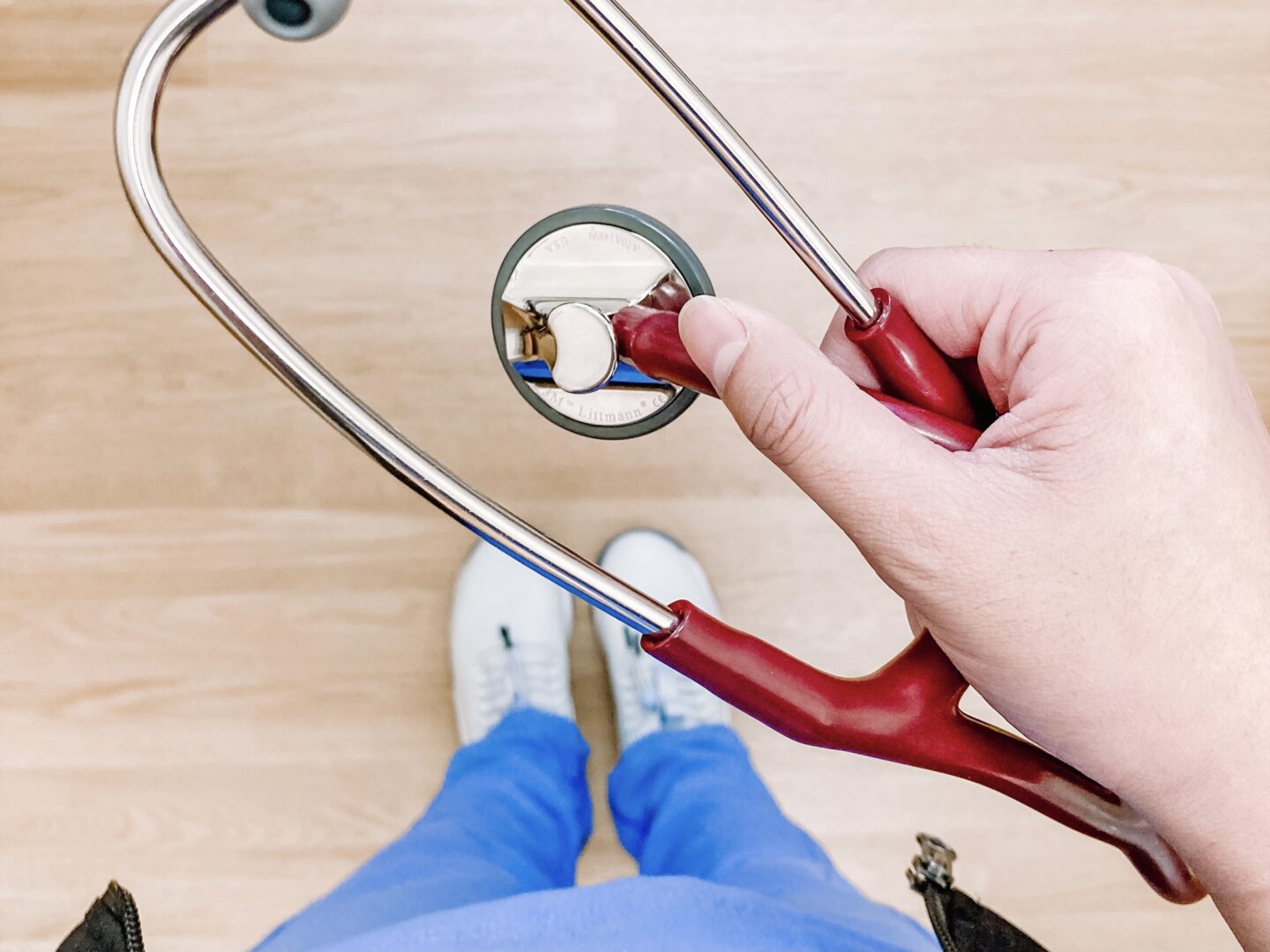
The third year of medical school is arguably the most important of all four years. It’s the year when you begin to learn how to apply all your foundational knowledge into clinical practice. It’s when you learn bedside manner. It’s when you build your clinical skills to become a great physician. It’s when many students gain exposure to their specialty of interest and make their decision.
It’s February 2021 and I am a third year medical student. Most medical students decide on their specialty by the end of 3rd year because residency applications open at the beginning of your 4th year. The majority of 4th year is applying for residency, interviewing, and electives.
By now you can see how important the third year of medical school is, especially for those who do not yet know what specialty they want to pursue. For me, I had some idea. For others, especially those interested in surgical specialties, the COVID-19 has impacted clinical training negatively.
In this post, I talk about how COVID-19 has affected my clinical training, why I am concerned to graduate next year, but why it will all be okay (hopefully).
PPE and the Human Connection
To avoid any misunderstanding, I have nothing against wearing PPE. I simply want to share my experience on how it has affected my interactions with patients, residents, and attendings.
I’ve found that patients may not recognize your face or your voice underneath the mask, goggles, and face shield until maybe after the 3rd day of visiting them. Then, once they recognize your voice, it’s harder to emotionally connect with them because, well, they’re not able to see your facial expressions of emotion. People don’t think about it, but all the emotional and social cues humans exhibit to communicate with each other are through facial expressions and/or body language. This makes it more challenging to build rapport with your patients if they can’t pick up on these cues.
The same applies for residents and attending physicians. Obviously this is anecdotal. I don’t know if any research has been done on this. But residents and attendings work with many, many students. It’s already hard enough to stand out in the crowd without the masks. It’s already challenging enough for residents and attendings to remember our names and faces! When it comes down to writing evaluations, it might be harder for our residents and attendings to recall who we were. Now, this all depends on the character of the medical student and the memory of the residents and attendings. I’m always surprised when I pass by a resident in my mask and PPE and they greet me by name even though my rotation ended several weeks ago. As far as the character of the medical student, I’m one of those people who love to smile and laugh. I smile a lot because I know it’s contagious and it also helps me connect with people. This is important not just for inter-professionalism and team work, but for our evaluations. These evaluations go in our Dean’s Letter, which is something residencies care deeply about when reviewing your application to give you an interview.
While other students may not mind, I mind that PPE affects my ability to connect with people. Here are some things I’ve learned to better connect with people:
- Talk louder and more clearly if I am wearing a face shield.
- Smile “with my eyes”, don’t be afraid to laugh LOUDER.
- Style my hair into a right sided braid EVERY TIME. I’ve had patients ask about it whenever I showed up with my hair in a pony tail. I’ve had kids remember me by the girl “with the braid”.
- Exaggerate my body language. I tilt my head more when I’m talking to patients so they know I’m listening. I lean in more and I try to get on their level, even in the hospital when there are no chairs at the patient is on the bed. This changes the atmosphere of our conversations more so than you’d think!
- Perfect your oral presentations and ask questions often around residents and attendings. Don’t be afraid to demonstrate your bedside manner around them as well. They notice!
Shorter Rotations
I can’t speak for other students, but we lost about 5 months of clinical training. Our Internal Medicine went from 8 to 6 weeks, Surgery from 8 to 6 weeks, OBGYN from 6 to 4 weeks, Neurology from 4 to 3 weeks, and Pediatrics from 6 to 4 weeks. Our foundational elective time went from 4 to 3 weeks. Psychiatry and family medicine remained at 4 weeks. This doesn’t all add up to 5 months because of online didactics that we did during the 5 months.
Rotations being short 10 weeks may not seem like a huge deal, but for us, we definitely would have benefited all around from an additional 10 weeks with patients, residents, and attending physicians. The reality is that the more time you spend with your residents and attendings, the more you learn, the more you grow, the more time your superiors have to get to know you, and the better your evaluations are. Several evaluations I received commented on how the rotation was too short to properly evaluate me, despite that I did my best to put myself out there.
For me, one of the highlights of our school was that we start clinical training 6 months earlier than our colleagues at other schools. That’s why we take the USMLE Step 1 before March because our rotations begin around mid March to late March. Due to the pandemic, our rotations were delayed until late July. From late May to July, our school had us attend virtual Zoom didactics to partially “make up for” the weeks that we would lose in our rotation. This way we could meet graduation requirements and stay on track for graduating on time. For example, we had 2 weeks of online pediatrics didactics and had the option of taking the shelf exam afterwards (which most of us did). Then when rotations start, we would have 4 weeks on pediatrics. Technically, we still did 6 weeks of pediatrics, but we lost 2 weeks in-person clinical training.
Due to complications in vaccine distribution at our school, we were also pulled out of our clinical training in January for 2 weeks as well.
No Away Rotations, Less Elective Time
For more competitive specialties like orthopedic surgery or ENT, away rotations or “audition rotations” are provide a unique opportunity to complete a rotation at a residency program you are interested in applying for. It is also an opportunity for residency programs to remember you and potentially help you score an interview if you did well on the rotation.
Less elective time, again, is more important for those who are unsure of their specialty and/or have not yet been exposed to it adequately. For example, at my school, anesthesiology and emergency medicine are not core rotations. Students typically take those as electives late in their 3rd year or early 4th year at the latest. At my school, many students were not able to take an elective of their choice due to the pandemic.
Patient Volume
Learning from patients is a privilege. We are lucky that our patients allow us to learn from them. But with the pandemic, as you may know, patient volume is lower, which meant that we had less learning opportunities and less exposure to a breadth of patient cases. I noticed this particularly while on my OB-GYN, inpatient pediatrics, and inpatient psychiatry and less so while on neurology and inpatient medicine. I suppose that strokes and heart failure don’t stop during a pandemic. As for OB-GYN, pediatrics, and psychiatry, I can only speculate that these patient populations probably wanted to avoid the hospital if at all possible.
Again, I imagine that this would be more noticeable on surgical specialties, especially since elective surgeries were limited as a result of the pandemic. While on my 1 week inpatient gynecology service, there were 3 students and only 1 patient to round on. Another student and I literally had zero patients to see and round on the entire week. I also saw zero hysterectomies, which is supposedly bizarre because you typically see several of these and it’s one of the best surgeries to see while on OB-GYN.
Telemedicine, Telemedicine, and More Telemedicine
Of course, telemedicine has its pros and cons for patients and healthcare professionals alike. For students, it was a great way to learn how to care for patients virtually, but also kept us from learning other clinical skills that we normally would learn in-person.
Taking histories becomes easier on telemedicine because you can take notes, look up clinical information, while also having the patient within your view. On the plus side, our telemedicine manner becomes better and we write better notes! But of course, we can’t practice our physical exam skills and literally, bedside manner.
The strangest telemedicine week was when I was on my inpatient pediatrics week, all virtually. The intern would literally FaceTime me and give the phone to the patient so I could conduct my “pre-rounds”. Then the intern and I would discuss the plan. I’d Zoom in later for rounds with the attending and entire team and present my patient. Then I’d wait at home for any new admissions and my intern would FaceTime me again to go take a full H&P. That was the workflow.
It Will Be Okay
We’ve been told by the medical association and our school that it will all be okay because every medical student is in the same boat! While this is true, it doesn’t mean that we as medical students are not allowed to feel frustration from how the pandemic has limited our clinical training. Mostly, I worry that I won’t be a great intern because of the lost in clinical training time. But again, I keep telling myself it will all be okay because several other medical students will be in this boat as well and I think residencies will be understanding of our situation.
Thanks for reading if you made it this far! I hope this was an interesting read.
With lobe,
Kelly
